
7 BLACK RHINOS MAKE A NEW HOME IN MOZAMBIQUE

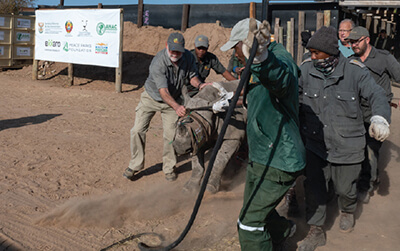
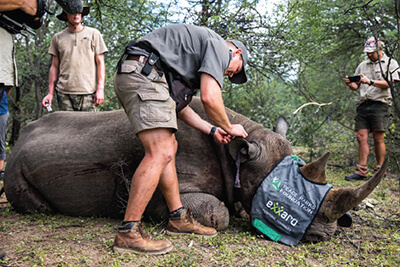
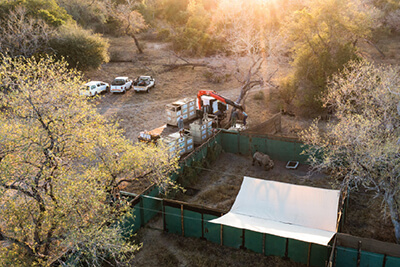
Exxaro’s ongoing commitment to conservation is making a real difference. Just recently, seven critically endangered black rhinos were safely translocated from Exxaro’s Manketti Game Reserve in South Africa to Zinave National Park in Mozambique – two months after 19 white rhinos were successfully reintroduced into the park. Even better news is that a new calf was born into the white rhino herd, setting high hopes for the new arrivals.
Did you know: Since 1960, Africa’s black rhino population dropped by 98% to less than 6 000 individuals.
The two herds are part of a pioneering conservation project and collaboration between Exxaro, the Peace Parks Foundation and Mozambique’s National Administration for Conservation Areas (ANAC), with support from the governments of Mozambique and South Africa.
The project, which aims to secure and expand the populations of both species, will introduce more than 40 critically endangered black rhino and nearly threatened white rhino into the park over the next two to three years. Exxaro is not only donating the rhinos, but is playing a significant role in the strategic planning, coordination and funding of this international conservation initiative.
“This project compliments Exxaro’s Biodiversity and Environmental Management strategies and meets our project criteria of moving our rhino to a safer location, while significantly contributing to the broader rhino conservation strategies of the region,” said CEO, Dr Nombasa.
Why are black and white rhino so important to the environment?
African rhinos are a ‘keystone species’ – their presence and role within an ecosystem has a disproportionate effect on life of all kinds, from insects to antelope and elephant. While the white rhinos will help restore Zinave’s grasslands as they graze, the black rhinos browse on very specific plants and process them is a unique way. This acts as a potent natural fertiliser and enriches the soil, introducing more nutritious plants into these ecosystems.
“To have two African rhino species reinstated as the vital cornerstones of this complex ecosystem will make a crucial contribution to the greater biodiversity, and to the status of the park as a sought-after eco-tourism destination and the only “Big Five” national park in Mozambique,” said Werner Myburgh, CEO of Peace Parks.

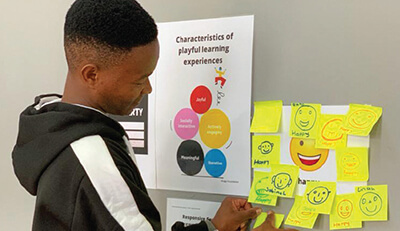
BELFAST MINE HELPS 15 ECD TEACHERS REACH NQF LEVEL 5
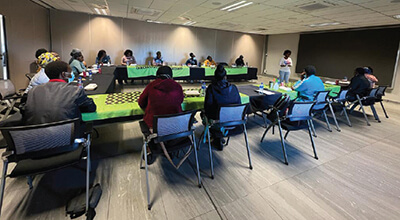
Our Belfast Mine joined forces with the eMakhazeni Local Municipality to launch a skills development programme that will enable 15 Early Childhood Development (ECD) practitioners to study for a National Diploma in ECD over one year.
The programme came about when the eMakhazeni ECD chairperson and mine identified the need to help practitioners improve their cognitive, emotional and social development skills. These skillsets are critical to supporting children in the early stages of their development.
Belfast Mine appointed an accredited service provider for this one-year programme, which offers a Level 5 National Qualifications Framework (NQF) in the ECD field. The qualification will enable practitioners to facilitate the development of young children in a way that is culturesensitive and fits their developmental needs.
“Through this training I learned how to study and teach and gained skills to manage conflict and how to accommodate different personalities,” said ECD Manager, Thabisile Tshabalala.
The training combines virtual and physical attendance and aims to equip practitioners with online learning and collaboration skills. The curriculum includes modules like design activities, literacy, and communication skills, through active learning.
Acting Business Unit Manager, Lesta Makhabela, pointed out that Belfast Mine sees ECD as an important investment in the development of its surrounding communities. The mine will continue to partner with the government to improve the outcomes of children from an early age.
<
>