

EXXARO PARTNERS WITH THE NATIONAL BUSINESS INITIATIVE TO STRENGTHEN LOCAL MUNICIPALITIES
On 13 May, Exxaro marked a significant milestone in local development with the Municipal Capacity Building Programme (MCBP) certificate ceremony. The event honoured the Lephalale Local Municipality and Waterberg District Municipality, celebrating their achievements in a three-year programme aimed at enhancing municipal capacity in areas where Exxaro operates. The event was attended by Exxaro’s Chief Sustainable Impact Officer, Mongezi Veti, and the CEO of National Business Initiative (NBI), Shameela Soobramoney, along with various government officials and traditional leaders.
In implementing its Social and Labour Plans (SLPs), Exxaro has partnered with the Lephalale Local Municipality on vital water and sanitation infrastructure projects. This collaboration has improved the municipality’s technical competency, leading to enhanced service delivery and better maintenance of SLP projects. The MCBP also invests in the municipality’s growth and sustainability, ensuring the longevity of its infrastructure.
The ceremony celebrated the strength of effective business and government collaboration, reaffirming Exxaro’s commitment to fostering the growth and sustainability of the communities it serves.
“At Exxaro, our Sustainable Growth and Impact strategy ensures that our people and partners have the capabilities, mindset, environment, and passion to achieve our purpose. However, we understand that we cannot do it alone, which is why the partnership with NBI represents a positive step for the people of Lephalale and Waterberg.”
Mongezi Veti, Exxaro’s Chief Sustainable Impact Officer
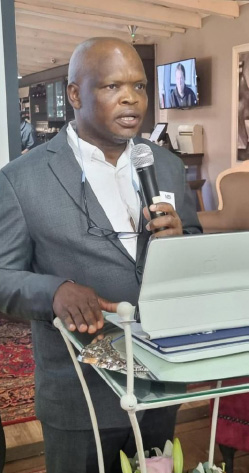
Mongezi Veti

SHAPING A SUSTAINABLE FUTURE
SHAPING A
SUSTAINABLE
FUTURE
Mongezi Veti, Exxaro’s Chief Sustainable Impact Officer
“I never imagined I’d be leading sustainability efforts at one of South Africa’s largest coal producers. But here I am, proud to spearhead a ground-breaking collaboration between Exxaro, the Agricultural Research Council, and the EKIM Wildlife Centre of Excellence.
At Exxaro, we are not just about mining – we are powering a cleaner world. We are balancing the country’s need for coal-generated power with the urgent transition to a low-carbon economy. It’s a delicate dance, but one we’re committed to perfecting.
Our Sustainable Growth and Impact Strategy isn’t just talk. From project design to mine closure, we’re reducing our footprint, protecting biodiversity, and applying the mitigation hierarchy: avoid, minimise, restore, and offset.
But we can’t do it alone. That’s why this partnership is so crucial. Over the next five years, we’ll be diving into research projects on livestock production, sustainable land management, and community-based agricultural enterprises.
This is more than an MOU, it’s a promise to restore sustainable value to the land, local ecosystems, and people. We’re offsetting our mining impact by creating a positive ripple effect in our communities.
The challenges are immense, but so are the opportunities. As we navigate this transition, we’re not just adapting, we’re evolving, and we’re inviting you to join us on this journey towards a more sustainable future.
We dare not fail. The world is watching and the stakes have never been higher. But together, we can turn the page on unsustainable practices and write a new chapter in responsible resource management.
Let’s make every action count. Our future depends on it.”

Exxaro, ARC and EKIM Wildlife representatives at the MOU signing ceremony
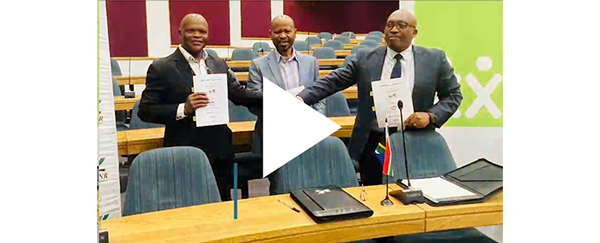
Video: Highlights video of Exxaro Resources, the Agricultural Research Council (ARC), and the EKIM Wildlife Centre of Excellence signed a Memorandum of Understanding (MoU).

DR NOMBASA APPOINTED PRESIDENT OF MINERALS COUNCIL SOUTH AFRICA
“Being the Vice President of the Minerals Council was a great opportunity for me. I wish to thank the Minerals Council South Africa for now entrusting me with this significant responsibility of being the President. I commit to continue doing my
utmost best to work with the Board and the CEO of the Minerals Council and the industry at large to make sure that there is a better place for us to be tomorrow, than we are today,” said Dr Nombasa.
In her role as President, Dr Nombasa will be looking to engage in public-private partnerships to produce innovative and sustainable solutions for the advancement of the industry and betterment of our country.


<
>